Beneficial ownership chains took days. See how AI UBO mapping resolves four-tier graphs across registries, scores confidence per edge, and meets FATF Rec 24.
Table of contents
- Ultimate beneficial owner resolution is the slowest step in business onboarding, and it is where deals stall. A four-tier chain across opaque jurisdictions can take a manual team more than a week to untangle.
- AI UBO mapping resolves ownership chains by pulling and cross-referencing corporate registries across jurisdictions, scoring confidence on each ownership edge, and assembling a verifiable graph with a source behind every link.
- The EU continues to define a beneficial owner at the 25 percent ownership-or-control threshold under the AML Regulation, with the Commission able to set a lower threshold for higher-risk sectors.
- The US picture changed in 2025: FinCEN's interim final rule exempts domestic companies from beneficial ownership reporting, so the federal register now mainly covers foreign reporting companies. You cannot assume one clean US source.
- AI breaks on nominee directors, trust structures, and shell layers in sanctioned jurisdictions. Those go to a human, with the agent assembling the evidence first.
- Every resolved edge needs a source registry, a snapshot timestamp, and change detection over time, because an ownership graph is only defensible if you can show where each link came from and when.
AI UBO mapping is the use of reasoning agents to resolve a company's ultimate beneficial owners by pulling and cross-referencing corporate registries across jurisdictions, scoring confidence on each ownership edge, and assembling a verifiable ownership graph. It compresses a multi-day manual trace into minutes while keeping a source citation behind every link, which is what makes the result defensible.
TL;DR
AI UBO mapping resolves a company's ultimate beneficial owners by pulling and cross-referencing corporate registries across jurisdictions, scoring confidence on each ownership edge, and assembling a verifiable graph. Consider a Series B fintech that needed eleven business days to resolve a Cayman to BVI to Delaware ownership chain, long enough to put a meaningful new-revenue deal at risk. The data existed across registries; nobody could assemble it fast enough.
The legal target is clear: the EU treats a beneficial owner as a natural person holding more than 25 percent ownership or control under the AML Regulation, and FATF Recommendation 24 requires adequate, accurate, and up-to-date beneficial ownership information. The operational reality is messy, because registries are slow, some jurisdictions are opaque, and the US federal picture narrowed in 2025. This guide explains why UBO is the slowest step, what a UBO graph contains, how reasoning agents resolve chains with a citation on every edge, where AI breaks, and what audit trail makes the result defensible.
10 min read. Last updated 21 August 2026.
What is AI UBO mapping?
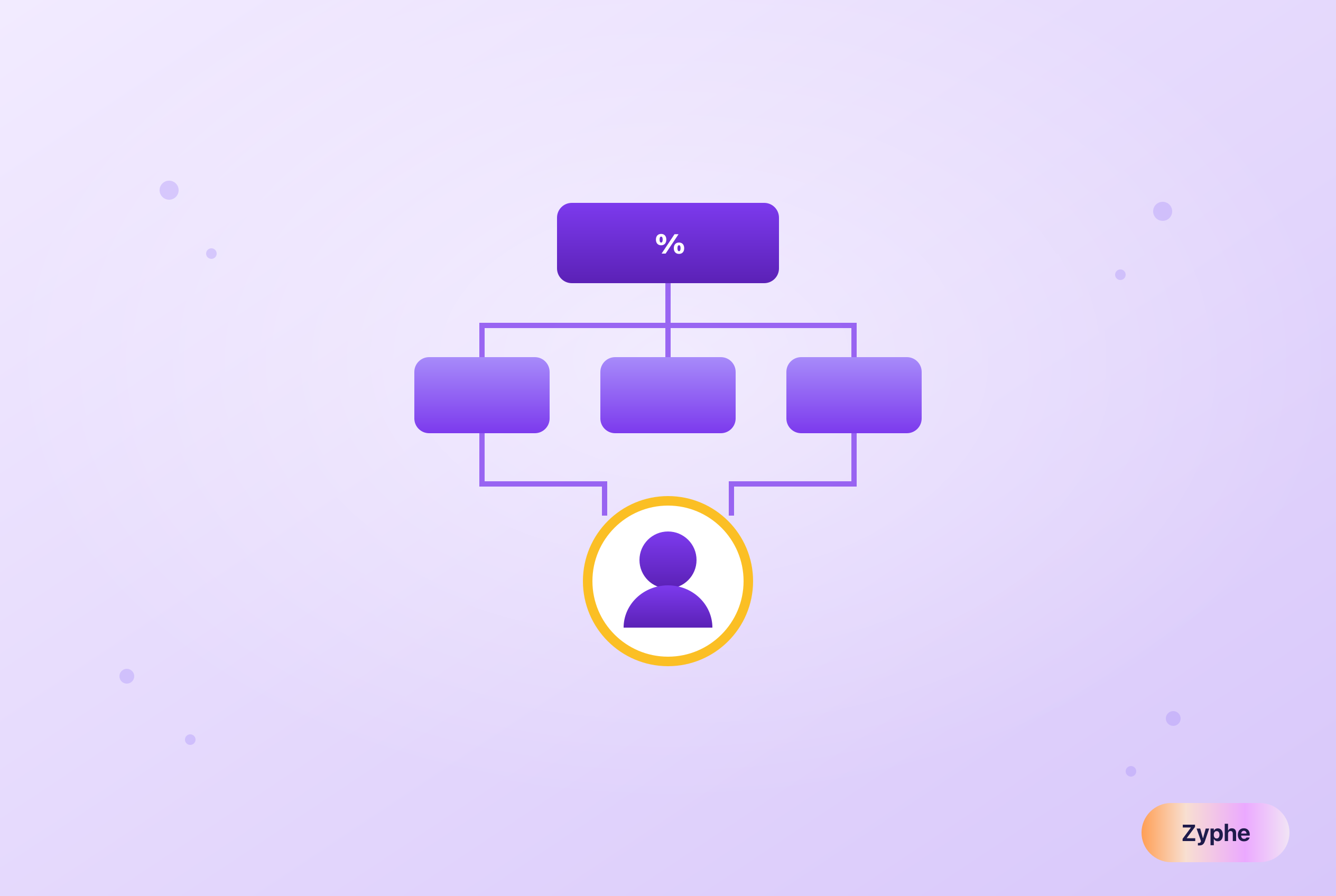
AI UBO mapping is the use of a reasoning agent to find the natural people who ultimately own or control a business, and to prove it. The agent pulls corporate-registry data across the jurisdictions in the ownership chain, links parent and subsidiary entities, identifies the natural persons at the top, scores how confident it is in each link, and assembles a graph you can inspect. Critically, it attaches a source to every edge, so the result is evidence, not assertion.
This is the ownership surface of the broader AI compliance agents pattern, and it is the hardest part of know your business onboarding. The reason it deserves its own treatment is that ownership is the one part of KYB that routinely crosses borders, hits opaque registries, and resists automation, which is exactly why a reasoning approach beats a fixed script.
Why is UBO the slowest step in KYB?
Most of business onboarding is fast. You verify the entity, check it against sanctions, confirm it trades. Then you reach ownership, and the clock stops.
Three things make UBO slow. Registry latency: corporate registries vary wildly in speed, format, and freshness, and some return scanned PDFs rather than structured data. Jurisdictional opacity: ownership often routes through jurisdictions that do not publish usable beneficial-ownership data, and since the Court of Justice of the European Union restricted general public access to EU beneficial-ownership registers in November 2022, even EU data now requires demonstrating a legitimate interest rather than an open lookup. Sanctions by association: a 25 percent-plus owner who is sanctioned can taint the whole entity under aggregation rules, so you cannot stop at the first layer, you have to resolve the chain to be sure.
Stack those together across a four-tier structure and a manual analyst is opening tabs, translating filings, and reconciling names for days. The work is not hard in any single step, it is slow because it is serial and cross-jurisdictional.
What does a UBO graph actually contain?
A UBO graph is not a list of names, it is a structure. Done properly it contains the legal entities in the chain, the natural persons at the top, and the relationships between them, each annotated.
For every node you want the entity or person, the jurisdiction, and the registry identifier. For every edge you want the percentage of ownership or control, the nature of control if it is not equity, such as a nominee or voting arrangement, and the source that establishes it. Layered on top you want risk annotations: which natural persons are politically exposed persons, which nodes hit sanctions lists, and where control is exercised through a nominee or trust rather than direct shareholding. The 25 percent threshold tells you which owners must be identified, but the graph has to carry enough structure to show why someone sits above or below that line, including aggregated holdings across several intermediate entities.
How do reasoning agents resolve ownership chains?
A reasoning agent resolves a chain the way a good analyst would, but in parallel and without tiring. It starts from the target entity and pulls its registry record, identifies the corporate shareholders, and routes each one to the right registry by jurisdiction, repeating layer by layer until it reaches natural persons. It draws on multiple data sources, corporate-registry aggregators, sanctions and politically-exposed-person feeds, and identity data, and reconciles conflicting records rather than trusting the first hit.
The part that matters most is confidence scoring per edge. Not every ownership link is equally certain. A clean registry filing with a stated percentage is high confidence; a name match across two jurisdictions with no identifier is not. The agent scores each edge, flags the weak links, and resolves the strong ones automatically. Zyphe runs this recursively across 240+ corporate registries, multiplying stakes along the chain so that indirect holdings are tested against the 25 percent threshold, with opaque jurisdictions such as the BVI, Cayman, and the Marshall Islands handled through a specialist agent, and it reports four-tier resolution in under 60 seconds. The speed is not the headline of AI UBO mapping, the citation on every edge is, because that is what turns a fast answer into a defensible one. The same grounding principle drives AI SAR drafting and L1 alert triage.
What is in the FinCEN beneficial ownership dataset, and what is not?
US beneficial ownership data changed materially in 2025, and assuming otherwise will burn you. The Corporate Transparency Act originally required most US companies to report beneficial ownership to FinCEN. In an interim final rule published in March 2025, FinCEN removed that requirement for domestic companies and US persons, narrowing the definition of a reporting company to entities formed abroad that register to do business in the US. Foreign reporting companies also do not report US persons as beneficial owners.
The practical effect: FinCEN's beneficial ownership register is no longer the comprehensive US ownership source it was designed to be. It mainly covers foreign reporting companies, and US-formed entity ownership has to be assembled from state filings and other sources. That is precisely the situation that makes AI resolution valuable, because there is no single clean registry to query, and the work is cross-source reconciliation rather than a lookup. For the regulatory backdrop, our guides on AML compliance software and why your KYC vendor is your biggest data breach risk connect the data picture to the controls.
Where does AI break, and how do you escalate?
A reasoning agent is strong on structured registry chains and weak exactly where ownership is designed to hide. Three patterns should escalate to a human every time.
Nominee directors and shareholders, where the registered party holds on behalf of someone undisclosed, defeat a registry-only trace because the real controller is not on the document. Trust structures, where control and benefit are separated by design, require reading the trust arrangement rather than a shareholding. And shell layers routed through sanctioned or non-cooperative jurisdictions deliberately break the data trail. In each case the agent should do the assembly it can, surface the gap explicitly, and hand a human the partial graph plus a clear statement of what it could not establish and why. That is far more useful than either a false-confident answer or a blank queue item. The pattern is the same analyst-in-the-loop design used across the cluster: the agent clears the resolvable majority and escalates the genuinely ambiguous, with evidence attached.
What audit trail does UBO resolution need?
An ownership graph you cannot source is an opinion. To be defensible, every resolved edge needs three things: the source registry or feed the link came from, a snapshot timestamp showing when the data was current, and change detection so that a later shift in ownership is caught rather than missed.
The timestamp matters more than teams expect, because ownership is not static. A graph that was accurate in January can be wrong by June, and a regulator examining a relationship will ask what you knew and when. Snapshotting each edge, and re-resolving on a schedule the way perpetual KYC handles identity, turns AI UBO mapping from a one-time hurdle into a maintained record. Storing that record without turning it into a liability is its own problem, which is why Zyphe keeps the underlying identity data sharded across decentralised storage with a customer-held key rather than in a single store.
When should a human verify the chain?
AI should not be the final word on a UBO chain in several situations, and saying so is part of using it responsibly. When the chain runs through a trust, a nominee arrangement, or a sanctioned-jurisdiction shell, a human has to make the call, because those structures are built to defeat exactly the registry logic an agent relies on.
A human should also verify when the agent's confidence on a material edge is low, particularly an edge that determines whether an owner crosses the 25 percent line, because that single link can change the whole risk picture. And high-risk relationships, large exposures, politically exposed owners, or entities in sensitive sectors warrant human sign-off on the final graph regardless of agent confidence. The right model is the agent doing the resolution and assembly at speed, and a human owning the judgement where ownership is contested or deliberately obscured.
The bottom line
UBO is the step where business onboarding goes from fast to stuck, because ownership crosses borders, hits slow or restricted registries, and is sometimes structured specifically to hide. AI UBO mapping fixes the speed without sacrificing defensibility: it resolves the chain across jurisdictions, scores confidence on each edge, and cites a source for every link, while escalating the trusts, nominees, and sanctioned shells that should always reach a human.
Hold the result to the same bar as any control: a source per edge, a timestamp per snapshot, and change detection over time. Get that right and a four-tier chain stops being an eleven-day deal-killer and becomes a minute of evidence you can defend.
Run a sample UBO chain, book a 20-minute walk-through, or see how it works.
Related resources
- AI compliance agents: the 2026 operator guide
- L1 alert triage with AI
- Can AI draft SAR narratives in 2026?
- KYB software guide 2026
- AML compliance software in 2026
- What is decentralised KYC, and how does it work?
- Perpetual KYC: from photograph to video
Cited sources
- FinCEN, Beneficial Ownership Information and the March 2025 interim final rule: https://www.fincen.gov/boi
- FATF, Recommendations (Recommendation 24, beneficial ownership of legal persons): https://www.fatf-gafi.org/en/topics/fatf-recommendations.html
- Court of Justice of the European Union, judgment of 22 November 2022 on beneficial ownership register access (eucrim summary): https://eucrim.eu/news/cjeu-no-unrestricted-access-to-data-of-beneficial-owners/
- Anti-Money Laundering Authority (AMLA) and the EU AML package: https://www.amla.europa.eu/about-amla_en
 Michelangelo Frigo (Co-Founder at Zyphe) Michelangelo Frigo is a privacy and identity infrastructure expert and co-founder of Zyphe.